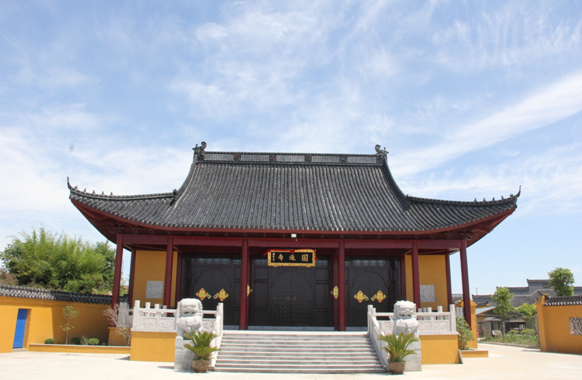
Yuantong Temple in Nantong, Jiangsu
Introduction
Yuantong Temple is a renowned religious and cultural site located in Hai'an, Nantong city, Jiangsu province. Covering an expansive area of over 200 mu (approximately 13.33 hectares), Yuantong Temple boasts a comprehensive architectural layout typical of traditional Chinese temples. The temple complex includes several key structures such as a monastery gate, a main hall, the Tianwang (Heavenly King) Hall, and east and west wings. Additionally, the temple grounds feature a vegetarian restaurant, a nursing house for seniors, and a traditional Siheyuan (quadrangle) courtyard, which embodies ancient Chinese architectural principles.
Cultural and Religious Significance
At the heart of Yuantong Temple stands a revered white marble statue of the Guanyin Bodhisattva, a prominent figure in Buddhist tradition symbolizing compassion and mercy. This statue serves as a focal point for worship and reflection for both locals and travelers. The temple is surrounded by more than 100 mu of lush greenery, providing a serene and tranquil environment that enhances the spiritual experience of its visitors.
Wanyuan Pagoda
The Wanyuan Pagoda, part of the Yuantong Temple complex, is a significant cultural landmark in the region. This pagoda not only attracts tourists for its historic and architectural value but also serves as a testament to the enduring legacy of Buddhist culture in Jiangsu province. Its designation as a national 3A scenic spot underscores its importance and appeal to a diverse range of visitors who come to appreciate its historical and spiritual offerings.
Community and Social Services
Beyond its spiritual and cultural dimensions, Yuantong Temple also plays an active role in the community by offering social services. The presence of a nursing house for seniors within the temple grounds illustrates its commitment to community welfare, providing care and support for the elderly. Additionally, the vegetarian restaurant on site caters to both visitors and residents, promoting a lifestyle in line with Buddhist teachings that emphasize non-violence and compassion towards all living beings.








